Designing With Reclaimed Wood: A Guide for Interior Designers
Reclaimed wood gives a project something new materials can’t: real age, texture and a story. To specify it well, designers need to plan for natural variation, choose the right finish for each room, set clear expectations with clients and allow for handmade lead times. This guide covers each of those, with practical specs for vanities and kitchen islands.
Why designers specify reclaimed wood
- Character. Nail holes, saw marks and color shifts give warmth that offsets stone, tile and metal.
- Density and stability. Older wood is often denser, with tighter growth rings than new lumber (Woodcraft).
- Sustainability. Reusing wood reduces demand for new timber (This Old House) — a selling point for many clients.
- Versatility. It works in lodge, farmhouse, industrial and modern rustic schemes.
Where reclaimed wood works best
| Application | Fit | Spec notes |
|---|---|---|
| Bathroom vanity | Excellent | Sealed top; good ventilation; see wood in bathrooms |
| Kitchen island | Excellent | Plan clearances and seating; see the island size guide |
| Linen and storage cabinets | Excellent | Match to vanity finish |
| Mirrors and frames | Excellent | Ties a room together |
| Inside a shower | Avoid | Constant water exposure |
Specifying a reclaimed vanity
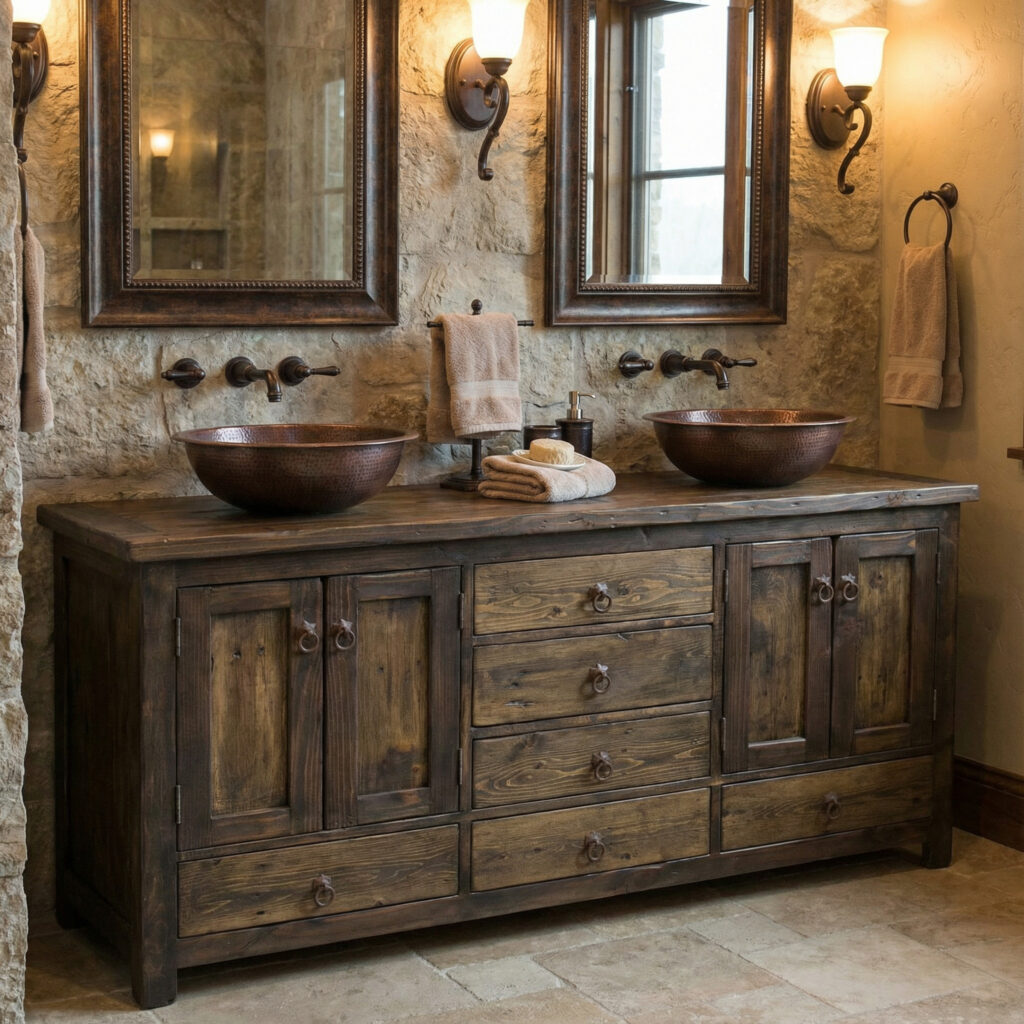
- Width and configuration: single or double, 24″–90″; see the vanity size guide.
- Depth and height: 20″ x 32″ for vessel sinks, 22″ x 36″ for drop-in.
- Sink and faucet: specify them with the vanity so the top can be drilled; see vessel vs drop-in.
- Finish: 10 options, from natural “As Shown” to Space Black.
- Top: sealed wood top included; note if a stone top will be supplied by others.
- Matching pieces: mirror, linen cabinet, medicine cabinet.

Specifying a kitchen island
- Clearance: 42″ work aisles for one cook, 48″ for two (NKBA).
- Seating: 24″ per seat and about 15″ of overhang at 36″ height; see island seating.
- Height: our islands are 36″, standard counter height.
- Depth: 30″ is common in our range; 40″–42″ options for seating plus storage, like the Remington.
Read the full rustic kitchen island guide.
Setting client expectations
Most reclaimed-wood disappointments come from expectations, not quality. Share these points early:
| Topic | What to tell clients |
|---|---|
| Variation | No two pieces match exactly; the photo is a guide, not a promise of identical boards |
| Character marks | Nail holes, checks and saw marks are part of the material |
| Movement | Wood responds to humidity; doors may feel snug in summer |
| Care | Wipe spills, ventilate bathrooms, re-wax the body occasionally; see our care guide |
| Timing | Made-to-order pieces take longer than stock items |
Mixing reclaimed wood with other materials
- Stone and quartz: a cool, smooth counter balances textured wood.
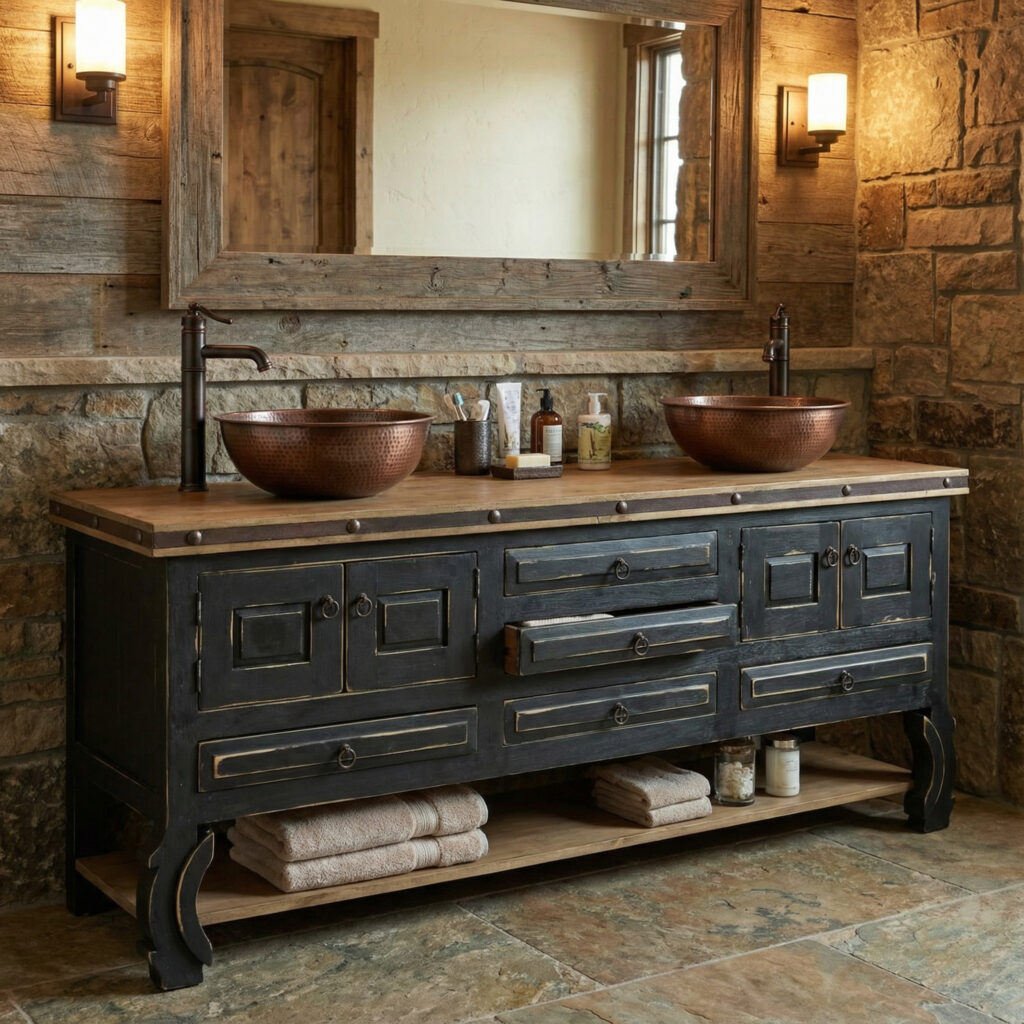
- Metal: copper sinks and bronze or black hardware feel natural with aged wood; see copper sinks.
- Tile: keep it simpler when the wood is busy — subway, zellige or large-format stone looks.
- Paint: soft whites and warm grays let the wood lead; deep greens and navy make it glow.
- Limit wood tones: two or three in a room, clearly different from each other.
Planning lead times
Handmade pieces are built after the order is placed; build times vary by design, so ask for the current estimate. Order the vanity or island when the design is approved, not when demolition starts. For tight schedules, check Quick Ship vanities and Quick Ship islands, and read Quick Ship vs made to order.
Custom work
Need a width between sizes, a different depth, or a design converted from single to double? We build to order — send drawings or measurements through Customize Your Piece. See how custom sizes work.
Working with FoxDen as a designer
Interior designers, architects, builders and other trade professionals can apply to our To The Trade program. See that page for current program details and how to apply.
Spec checklist
- Confirm dimensions and clearances against the floor plan.
- Specify sink, faucet and top drilling with the vanity.
- Choose finish; request guidance if matching existing millwork.
- Share the variation and care notes with the client in writing.
- Order on design approval to protect the schedule.
Presenting reclaimed wood to clients
- Show real photos of finished rooms rather than only product shots; our customer gallery is a good starting point.
- Explain the story: the wood’s previous life is part of the value for many clients.
- Bring it into the mood board alongside the actual tile, stone and metal samples.
- Put variation in writing in the proposal so it’s expected, not a surprise.
Pairing guide for specifiers
| Scheme | Wood finish | Sink | Metals | Tile |
|---|---|---|---|---|
| Mountain lodge | Dark reclaimed | Copper vessel | Oil-rubbed bronze | Slate, stone |
| Coastal rustic | Salty Dog or Baltic Teal | White ceramic | Matte black | White zellige |
| Modern farmhouse | Rustic White or Space Black | Black or white ceramic | Matte black | Large-format, subway |
| Warm minimal | Light natural wood | White semi-recessed | Black | Large-format stone-look |
Common specification mistakes
- Specifying a vessel sink on a 36″-tall vanity.
- Specifying a mirror wider than the vanity.
- Placing a wood vanity right beside an open shower with no splash barrier.
- Leaving too little aisle around an island once stools are pulled out.
- Ordering after demolition instead of at design approval.
Reference reading for your team
- Bathroom vanity sizes
- Vessel vs drop-in sinks
- Pairing mirror, faucet and sink
- Reclaimed vs solid wood
- Rustic bathroom remodel plan
Reclaimed wood in the kitchen
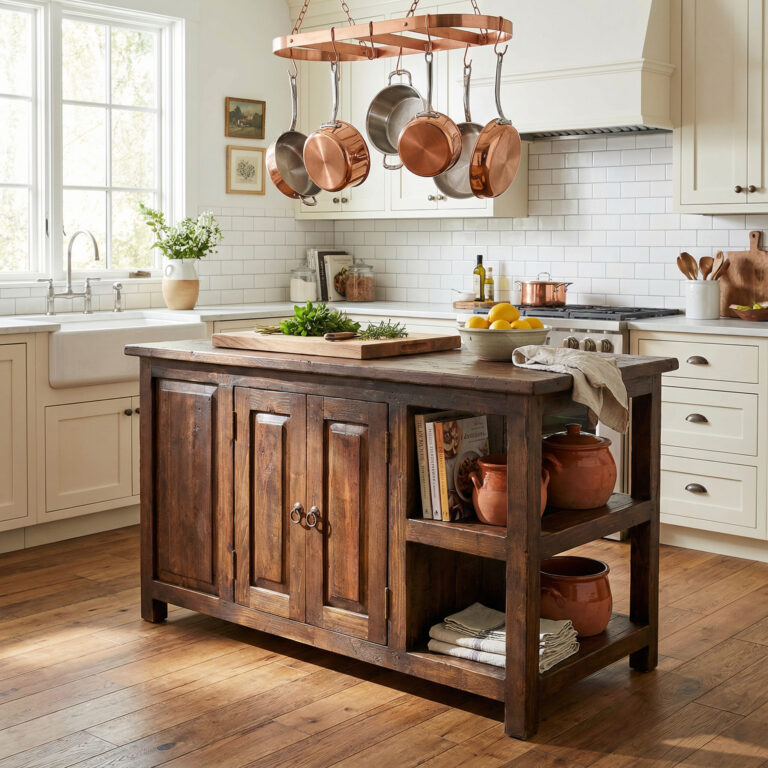
Kitchen islands are one of the most effective places to use reclaimed wood: they’re central, touched every day and seen from the whole room. A reclaimed island such as the Carson or Tobago brings warmth to kitchens full of painted cabinetry and stone counters.
For specifying, the same three questions apply as in bathrooms: Does it fit with proper clearances? Is the finish right for the use? Has the client seen and accepted the natural variation? Our island size guide and seating guide cover the dimensions, and the care guide gives you client-ready maintenance notes.
Pair reclaimed islands with rustic bar stools in a matching or contrasting finish to complete the space.
Frequently asked questions
Are reclaimed pieces suitable for rental or vacation properties?
Yes. Distressed and reclaimed finishes hide everyday wear well, which suits high-use spaces. Share simple care notes with the property manager.
How do I explain wood movement to a client?
Keep it simple: wood takes on and releases moisture with the seasons. Steady humidity and ventilation keep movement minor, and it’s normal for solid wood.
Can I specify a different hardware finish?
Ask through Customize Your Piece and include the hardware you have in mind.
Can I get finish samples?
Contact us through Customize Your Piece to ask about finish options for your project.
Is reclaimed wood suitable for commercial projects?
It’s widely used in hospitality and retail interiors. Discuss usage and care with our team for high-traffic spaces.
Can pieces be built to my drawings?
Often, yes. Send drawings and we’ll advise on what’s possible.
Does reclaimed wood cost more?
Not necessarily — our reclaimed and new solid wood vanities overlap in price. Size and features matter more.
Explore reclaimed vanities, solid wood islands, and join To The Trade.