Is a Wood Vanity OK in a Bathroom? Moisture, Sealing & Ventilation

Yes — a solid wood vanity is a great choice for a bathroom, as long as it’s properly finished and the room is ventilated. Wood has been used for bathroom cabinetry for generations. The problems people worry about — swelling, warping, water rings — come from standing water and trapped humidity, and both are easy to manage.
Why moisture matters for wood
Wood absorbs moisture from humid air and releases it as the air dries, swelling and shrinking slightly as it does (Wellfor). A few seasonal changes are normal. Damage happens when water sits on an unsealed surface or the room stays damp for hours after every shower.
That’s why the two things that matter most are the finish on the wood and how quickly the bathroom dries out.
Solid wood vs. particleboard in a damp room
Solid wood actually has an advantage here. Engineered panels such as laminate-covered particleboard or plywood have edges and cutouts that absorb moisture if they aren’t sealed (House Digest), and once particleboard swells it rarely recovers. Solid wood can be sanded, re-sealed and refinished, so small damage is repairable.
The finish: your first line of defense
Sealing wood vanities adds a layer of moisture protection (Angi). Polyurethane is easier to apply than epoxy and provides almost as much protection (Hunker).
On every FoxDen vanity:
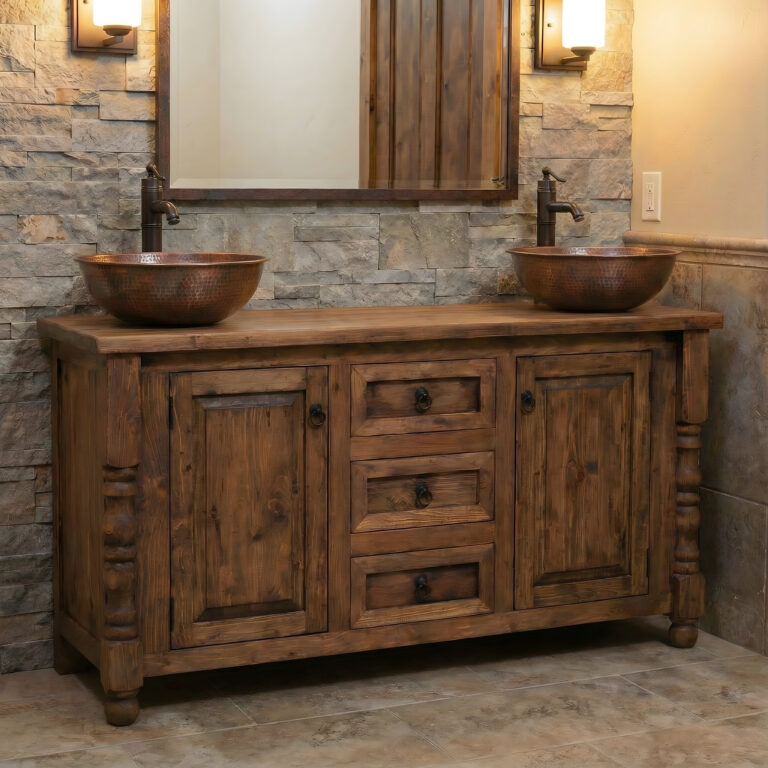
- The top — the part that sees splashes — is sealed with polyurethane.
- The body gets a hand-rubbed wax finish that brings out the grain and can be refreshed over time.
- Sink and faucet holes can be drilled for you when you order your sink and faucet with the vanity.
Ventilation: the habit that matters most
A good, working exhaust fan sized for your bathroom is the best way to keep humidity in check (Angi). Woodworkers say the same: the best protection for any wood in a bathroom is a high-volume vent fan, because no finish can fully compensate for a constantly steamy room (Fine Woodworking forum).
| Habit | Why it helps |
|---|---|
| Run the fan during every shower | Removes steam before it settles on surfaces |
| Keep it running 15–20 minutes after | Brings peak humidity down faster (Wellfor) |
| Add a timer switch | So the fan keeps running after you leave |
| Crack the door or window | Helps in bathrooms with weak fans |
| Check the fan vents outside | A fan that vents into the attic just moves the problem |
A healthy target for most bathrooms is roughly 40%–60% relative humidity outside of shower time (USA Cabinet Store). A cheap hygrometer will tell you where yours sits.

Daily and seasonal care
Every day
- Wipe up standing water around the sink and faucet base.
- Don’t leave wet towels or bath mats draped over the cabinet doors.
- Use a tray for toiletries so leaks and drips don’t sit on the wood.
Every few months
- Clean with a soft cloth and mild soap; avoid bleach and harsh all-purpose sprays.
- Check the caulk line where the sink meets the top and re-seal if it cracks.
- Look under the sink for slow drips from supply lines or the drain.
Once a year
- Refresh the wax on the cabinet body; see our furniture care guide.
- Inspect the top’s finish near the faucet — that’s where wear shows first.
What’s normal and what isn’t
| You notice… | Normal? | What to do |
|---|---|---|
| Doors a little snug in humid summer | Yes | Seasonal movement; usually eases in drier months |
| Small checks or cracks in reclaimed boards | Yes | Part of reclaimed character |
| Dull or white spot on the top | Watch it | Dry thoroughly; buff and re-seal if it persists |
| Soft or dark wood near the sink | No | Look for a leak and fix it; refinish the area |
Tips for kids’ and steamy bathrooms
- Choose a drop-in sink on a 36″ vanity to reduce splashing; see vessel vs drop-in.
- Distressed and reclaimed finishes hide everyday dings well.
- Keep the vanity away from the shower opening where possible.
- Add a linen cabinet so towels have a home off the counter.
Which woods and finishes handle humidity best?
All solid wood moves a little with humidity, but finish quality matters more than species. A sealed top, sealed edges and sealed sink cutouts are what keep water out. Here’s how common finishes compare in a bathroom:
| Finish | Water resistance | Repair | Where we use it |
|---|---|---|---|
| Polyurethane | High | Sand lightly and re-coat | Vanity tops |
| Wax | Moderate; renewable | Add fresh wax | Vanity bodies |
| Paint + topcoat | High | Touch up | Painted finishes |
| Raw / oil only | Low | Re-oil often | Not recommended near water |
Hunker notes polyurethane comes in matte or semigloss sheens (Hunker), so protection doesn’t have to mean a plastic-looking shine.
Placement tips that protect your vanity
- Keep distance from the shower. If the vanity sits right next to an open shower, a glass panel or curtain that stops spray helps a lot.
- Don’t block air flow. Leave a little space between the vanity and a tub so the gap can dry.
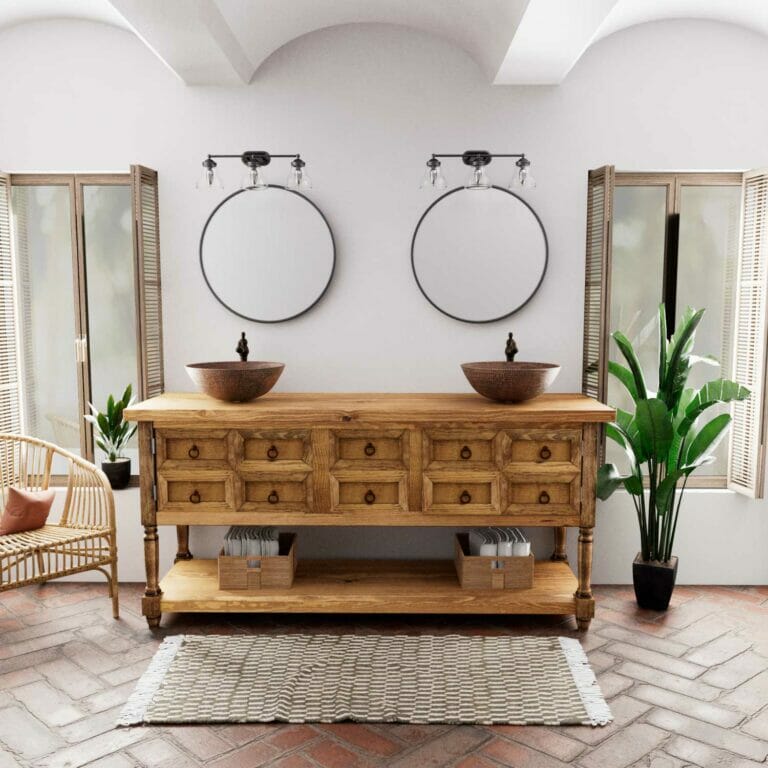
- Raise it on legs. Vanities on legs, like the Yugo, let air circulate underneath and make it easy to mop.
- Use a bath mat in front, not against the cabinet base.
Signs of a ventilation problem
If you see these regularly, the room isn’t drying fast enough — fix the fan before it affects the vanity, paint or drywall:
- Mirror stays fogged long after showers.
- Mildew in grout corners or on the ceiling.
- Peeling paint near the ceiling.
- Musty smell that doesn’t go away.
A simple test: hold a square of toilet paper near the fan grille with the fan on. If it isn’t pulled toward the grille, the fan may be clogged, undersized or not venting outside.
What about wood tops vs stone tops?
Every FoxDen vanity ships with a sealed solid wood top. Some homeowners prefer stone or quartz for heavy-use family bathrooms; others love the warmth of wood. A wood top is easy to keep in shape with the habits in this guide, and it can be refreshed instead of replaced. If you plan a stone top supplied by your contractor, mention it when you contact a designer.
Wood vanity care checklist
- Run the exhaust fan during and after every shower.
- Wipe the top and the faucet base dry daily.
- Keep towels off cabinet doors.
- Check the sink caulk and under-sink plumbing every few months.
- Refresh wax on the body once or twice a year.
For the full routine across all your wood furniture, read how to care for reclaimed wood furniture. Planning the whole room? See our rustic bathroom remodel plan.
Frequently asked questions
Will my wood vanity warp?
Not with a sealed top, a working fan and quick clean-ups of standing water. Warping comes from sustained moisture, not normal daily use.
Is reclaimed wood OK in a bathroom?
Yes. Reclaimed lumber has dried for decades and is often very stable; with the same finish and ventilation it performs like any solid wood.
Can I put a wood vanity in a bathroom without a window?
Yes, but the exhaust fan becomes essential. Use a timer so it keeps running after showers.
Should I add more polyurethane myself?
Not on a new piece. If the top wears after years of use, a light sanding and fresh coat restores it.
Ready for a wood vanity that lasts? Browse rustic bathroom vanities, compare reclaimed vs solid wood, or read the complete vanity guide.