Reclaimed Wood vs Solid Wood Vanities: What’s the Difference?

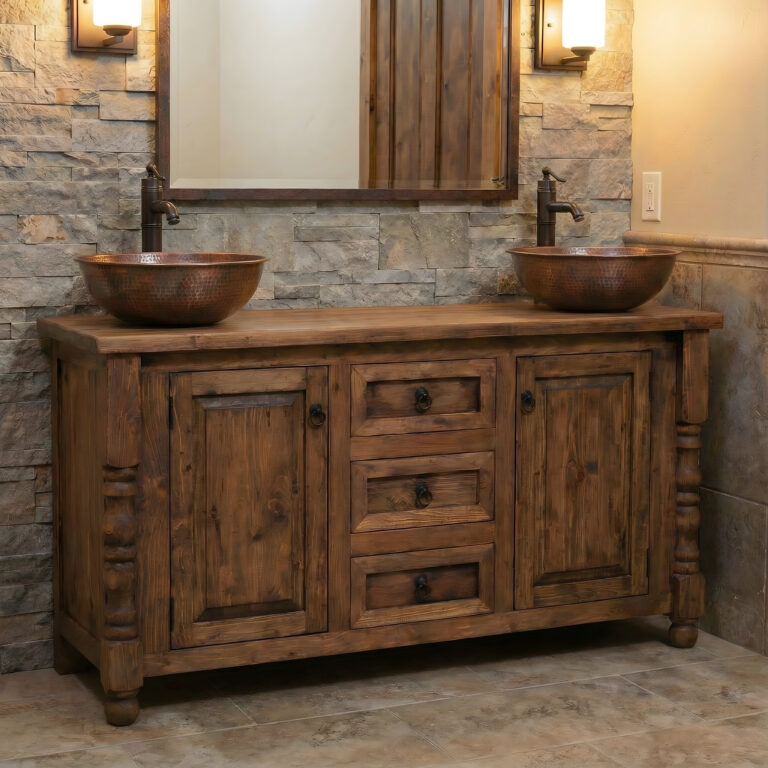
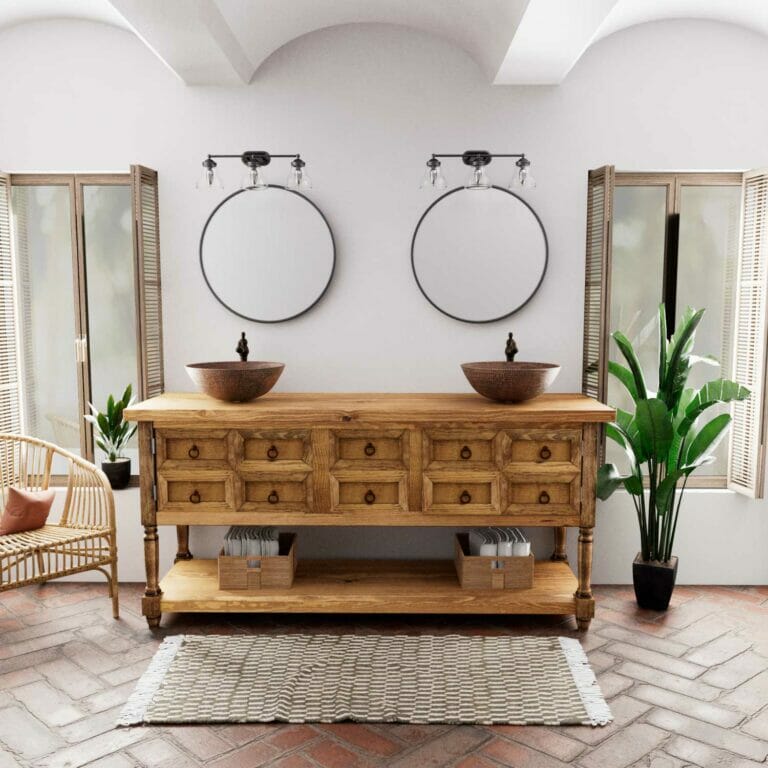
Reclaimed and new solid wood vanities are both real wood all the way through. The difference is the wood’s history: reclaimed boards come from old structures and carry nail holes, weathering and tight old grain, while new solid wood is freshly milled and more uniform. Both outlast engineered-wood cabinets in a bathroom when they’re properly finished. Here’s how to decide.
The three kinds of “wood” vanity
Shopping online, you’ll see “wood vanity” used for three very different products. Knowing which one you’re looking at matters more than the style.
| Reclaimed solid wood | New solid wood | Engineered wood (MDF, particleboard, plywood + veneer) | |
|---|---|---|---|
| What it is | Salvaged boards given a second life | Freshly milled lumber such as pine or alder | Wood fibers or layers glued into panels, often with a thin veneer or paint |
| Look | Nail holes, saw marks, color variation; every piece unique | Even grain and color; takes stain and paint evenly | Uniform; the “wood grain” is often a surface layer |
| Repairable | Yes — sand, re-wax, refinish | Yes — sand and refinish | Limited; damaged veneer or swollen edges are hard to fix |
| Water exposure | Good when sealed | Good when sealed | Raw edges and cutouts can swell if they get wet |
| Sustainability | Reuses existing wood | Uses new timber | Uses wood waste but relies on adhesives |
| Typical feel | Lodge, cabin, industrial, Old World | Farmhouse, transitional, painted looks | Contemporary, budget, flat-pack |
Engineered panels aren’t automatically bad — but laminate and plywood still need any cut edges and sink cutouts sealed, because bare edges absorb moisture (House Digest). Solid wood avoids that weak point entirely.
What makes reclaimed wood different
Old-growth density
Wood harvested generations ago often grew slowly in old forests. Older wood is usually denser, with growth rings closer together than new lumber (Woodcraft). That tight grain is part of why reclaimed boards feel so substantial.
Character you can’t fake
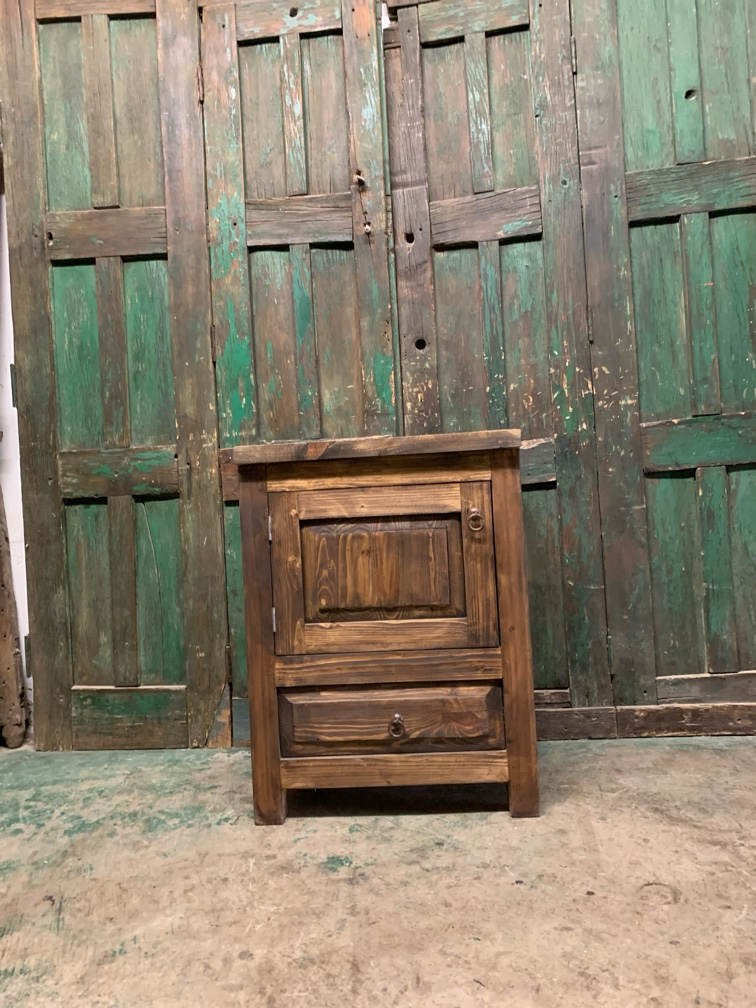
Nail holes, old bolt marks, checks and weathered color come from decades of real use. Factory “distressing” can imitate the look; reclaimed wood simply has it. If you want a vanity that looks like it has always been in the house, reclaimed is the most authentic route.
Stability
Wood that has dried for decades has already done much of its moving. Most reclaimed lumber is solid wood that is many years old, and in many cases the aging makes it more stable as moisture dissipates (Offerman Woodshop).
Sustainability
Using reclaimed wood reduces demand for new timber (This Old House) and keeps usable wood out of landfills (DutchCrafters).
What makes new solid wood a good choice
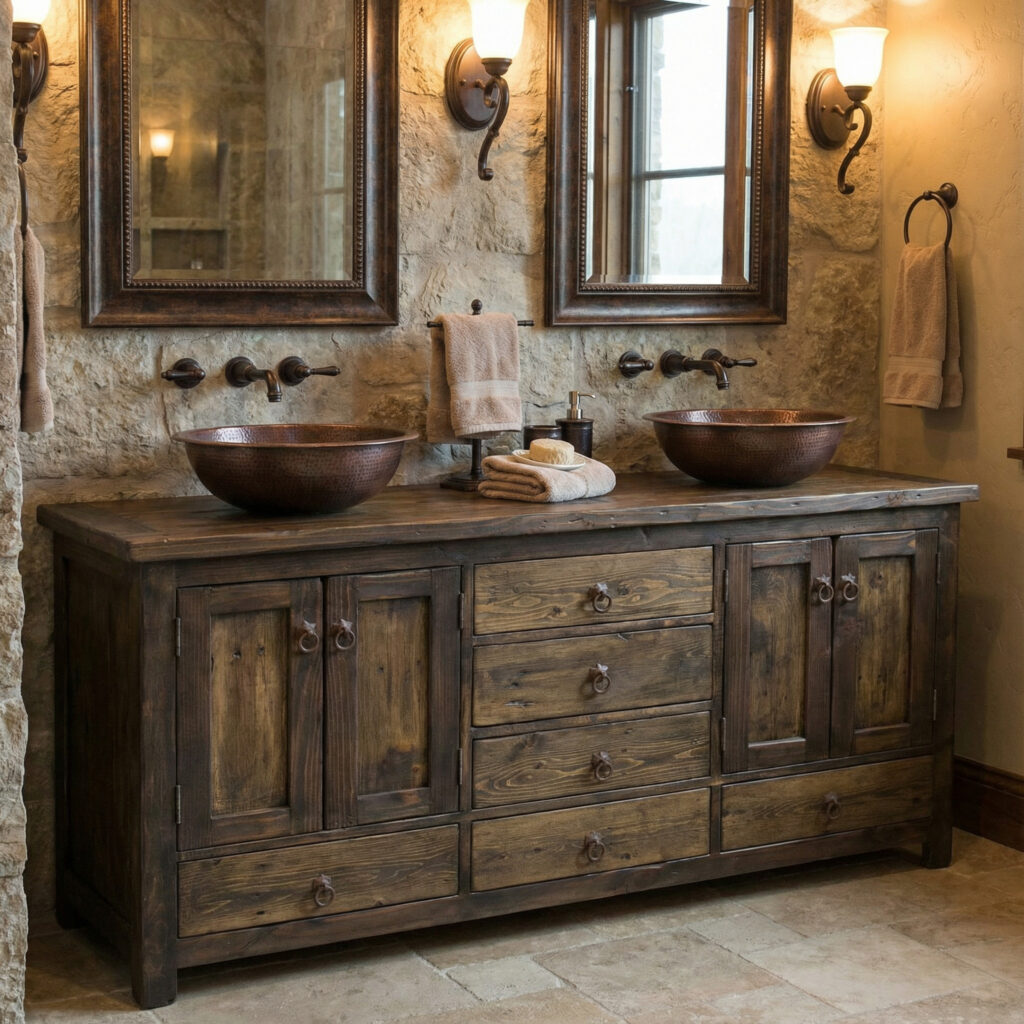
- Cleaner look. Even grain suits farmhouse and transitional bathrooms where you want warmth without heavy texture.
- Paint and stain take evenly. White, gray, teal and black finishes look crisp on new wood. Our Star White Vanity is a good example.
- Lighter tones. Pine and alder give a bright, Scandinavian-leaning rustic look; see light wood vanities.
- Predictable appearance. If two vanities need to match side by side, new wood is easier to keep consistent.
Durability in a bathroom: what actually matters
Whether a wood vanity lasts depends less on reclaimed vs new and more on finish and ventilation. Sealing wood vanities adds a layer of moisture protection, and a properly sized, working exhaust fan is the single best way to control bathroom humidity (Angi).
Every FoxDen vanity — reclaimed or new — comes with a solid wood top sealed with polyurethane and a hand-rubbed wax finish on the body. Read our guide to keeping a wood vanity safe from moisture for the full routine.
How to choose: a quick decision guide
- Pick the mood. Lodge, cabin, industrial or Old World → reclaimed. Farmhouse, cottage or transitional → new solid wood.
- Decide on color. Natural or dark stain → either works. Painted white, gray or teal → new wood gives a smoother finish.
- Think about matching. Need a vanity, linen cabinet and mirror to match closely? New wood is more consistent; reclaimed pieces will vary.
- Consider who uses the bathroom. Kids’ bath with lots of dings? Reclaimed and distressed finishes hide wear well.
- Check the budget. Prices overlap; size and features drive cost more than wood type.
Popular picks
| Vanity | Wood look | Sizes | From | Rating |
|---|---|---|---|---|
| Robertson Reclaimed | Reclaimed | 36″–90″ | $999 | 4.5/5 (73 reviews) |
| Ashburn Reclaimed Farmhouse | Reclaimed | 42″–72″ | $1,025 | 5/5 (11) |
| Speak Easy Reclaimed | Reclaimed | 48″–72″ | $1,149 | 4.9/5 (40) |
| Star White | Painted solid wood | 24″–60″ | $879 | 4.9/5 (29) |
| Clementine | Light solid wood | 48″–72″ | $1,099 | 4.5/5 (30) |
| Sonoma Double | Light solid wood | 60″–90″ | $1,499 | 5/5 (13) |
How reclaimed wood is prepared for furniture
Raw salvaged lumber isn’t ready to become a vanity the day it comes off an old building. Good reclaimed furniture starts with careful preparation, and knowing the steps helps you judge what you’re buying.
- Sorting. Boards are checked for rot, insect damage and splits. Unsound pieces are set aside.
- Removing metal. Old nails, staples and bolts are pulled. Their holes stay as character marks.
- Cleaning. Dirt and loose fibers are brushed off so the patina is preserved but the surface is clean.
- Milling and sanding. Boards are cut to size and sanded smooth enough to touch while keeping the aged texture.
- Finishing. A protective finish seals the surface — on FoxDen vanities, polyurethane on the top and wax on the body.
This Old House advises buyers of reclaimed lumber to ask where the wood came from and how it was processed (This Old House). If you have questions about a particular piece, our team can tell you more.
Cost: what actually drives the price
People often assume reclaimed is always the premium option. In practice, prices for reclaimed and new solid wood vanities overlap, and three things matter more than the wood source:
- Size. A 72″ double uses far more wood and labor than a 30″ single.
- Drawers and details. Dovetailed drawers, metal door panels and turned legs add build time.
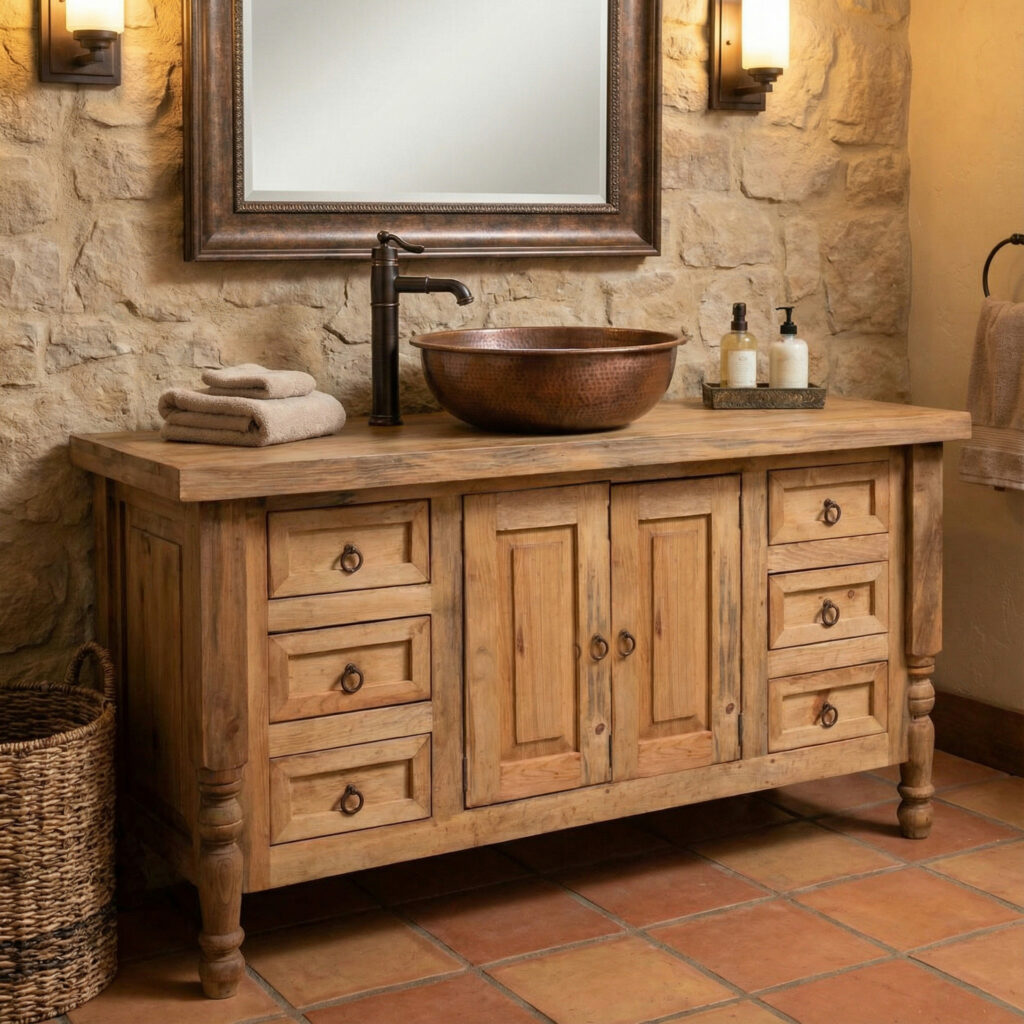
- Sinks and faucets. A copper vessel sink and a tall faucet add to the total.
Our vanity collection runs from about $879 to $2,399, and orders over $999 ship free. Compare reclaimed and new wood designs at the same width to see the real difference for your bathroom.
Matching the wood to the rest of the bathroom
Whichever wood you choose, the vanity will be the warmest element in a room full of tile, glass and metal. A few pairings work reliably:
| Vanity | Tile and walls | Metals |
|---|---|---|
| Dark reclaimed | White subway, light stone-look tile | Copper, oil-rubbed bronze |
| Medium reclaimed | Slate or charcoal tile, warm white paint | Matte black |
| Painted solid wood | Patterned cement tile, shiplap | Black or brass |
| Light solid wood | Soft gray or green tile, white walls | Matte black |
For a full room plan, see our rustic bathroom remodel plan, and for help pairing the mirror and faucet, read how to pair a mirror, faucet and sink.
Common myths about reclaimed wood
- “It’s weaker because it’s old.” Sound old-growth wood is often denser than new lumber; damaged boards are removed in sorting.
- “It can’t go in a bathroom.” With a sealed top and ventilation it performs like any solid wood — see is a wood vanity OK in a bathroom?
- “Every piece looks the same online.” Photos show the style; your vanity’s boards will have their own marks and color.
Frequently asked questions
Is reclaimed wood as strong as new wood?
Yes. Sound reclaimed boards are fully solid wood, and old-growth lumber is often denser than new. Weak or rotten boards are rejected during sorting.
Will a reclaimed vanity have rough spots or splinters?
The surface keeps its character — nail holes, checks and saw marks — but boards are sanded smooth to the touch before finishing.
Can I get a reclaimed vanity painted?
You can, but most people choose reclaimed for its natural patina. If you want a painted look, new solid wood usually gives a cleaner result.
Which is more eco-friendly?
Reclaimed wood reuses existing material, so it avoids cutting new timber. Any solid wood vanity that lasts for decades is also better than replacing a short-lived cabinet.
Still deciding? Compare the full collections of reclaimed vanities and farmhouse vanities, read our complete rustic vanity guide, or ask a designer about a custom build.