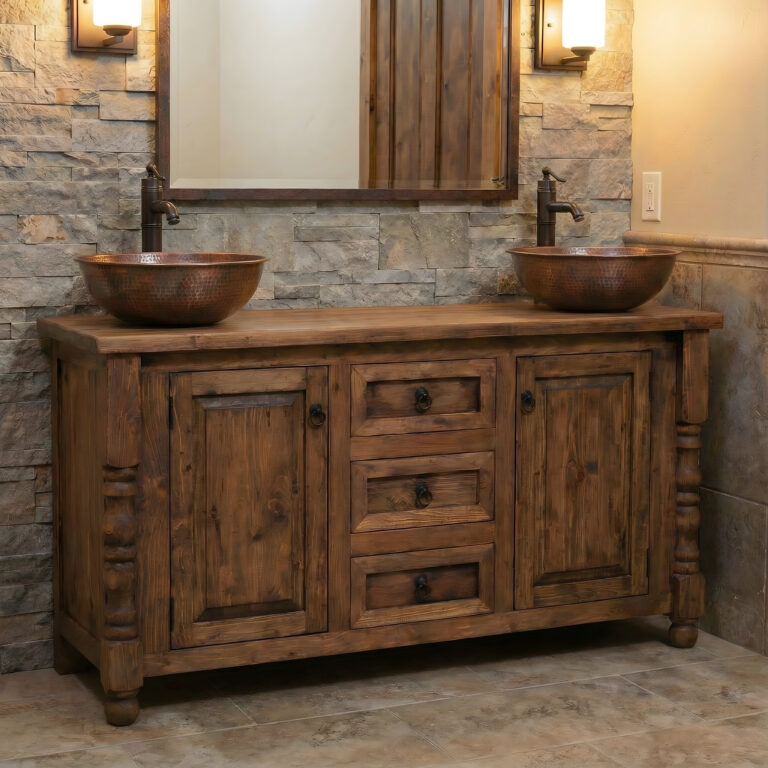
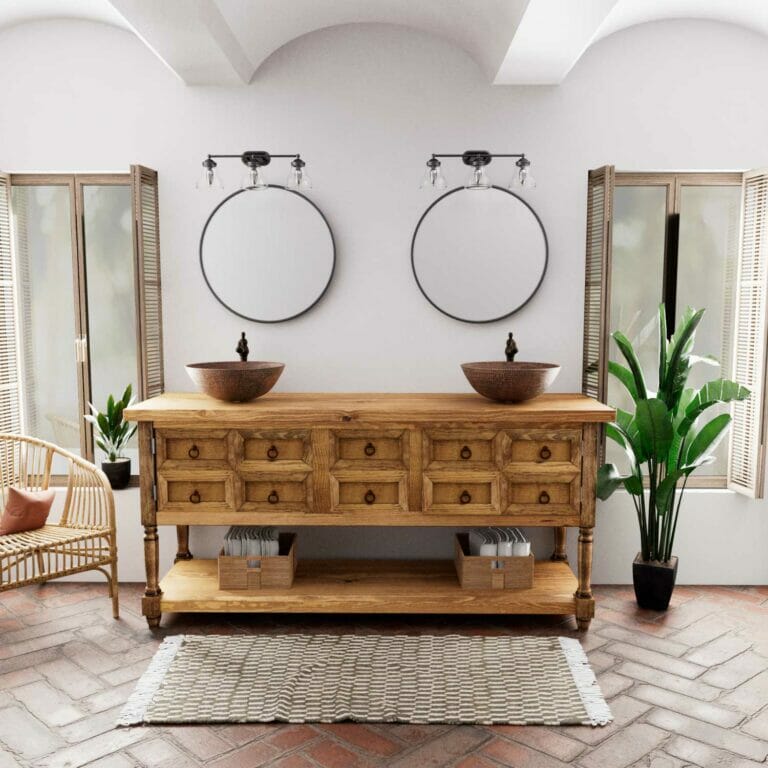
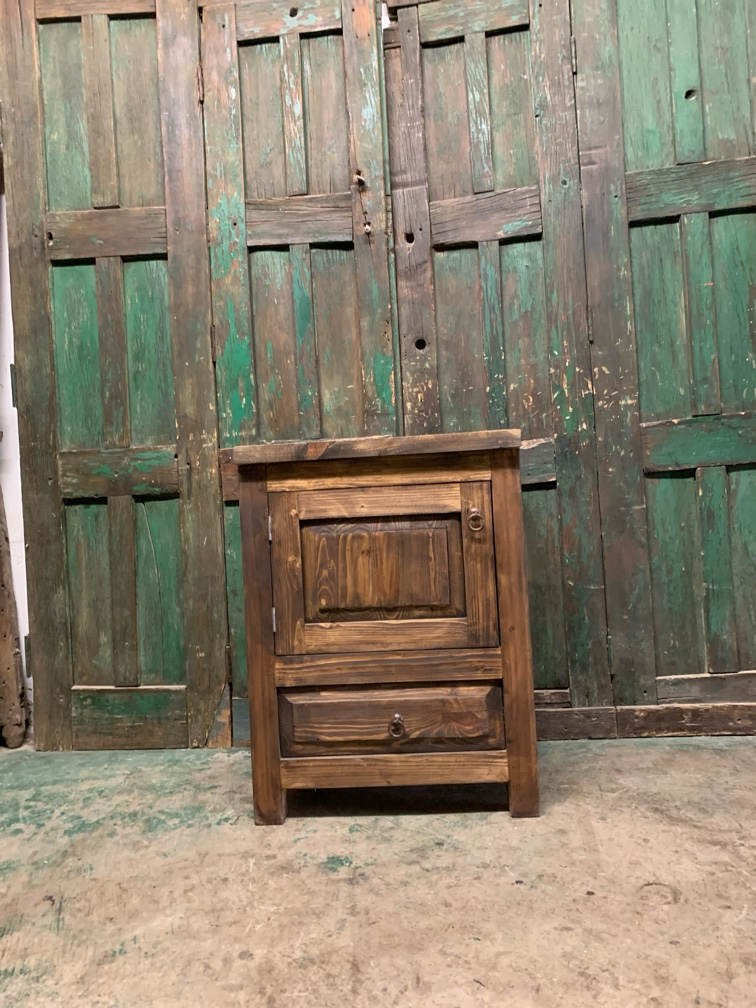
Vessel Sink vs Drop-In Sink: Which Works Best With a Wood Vanity?
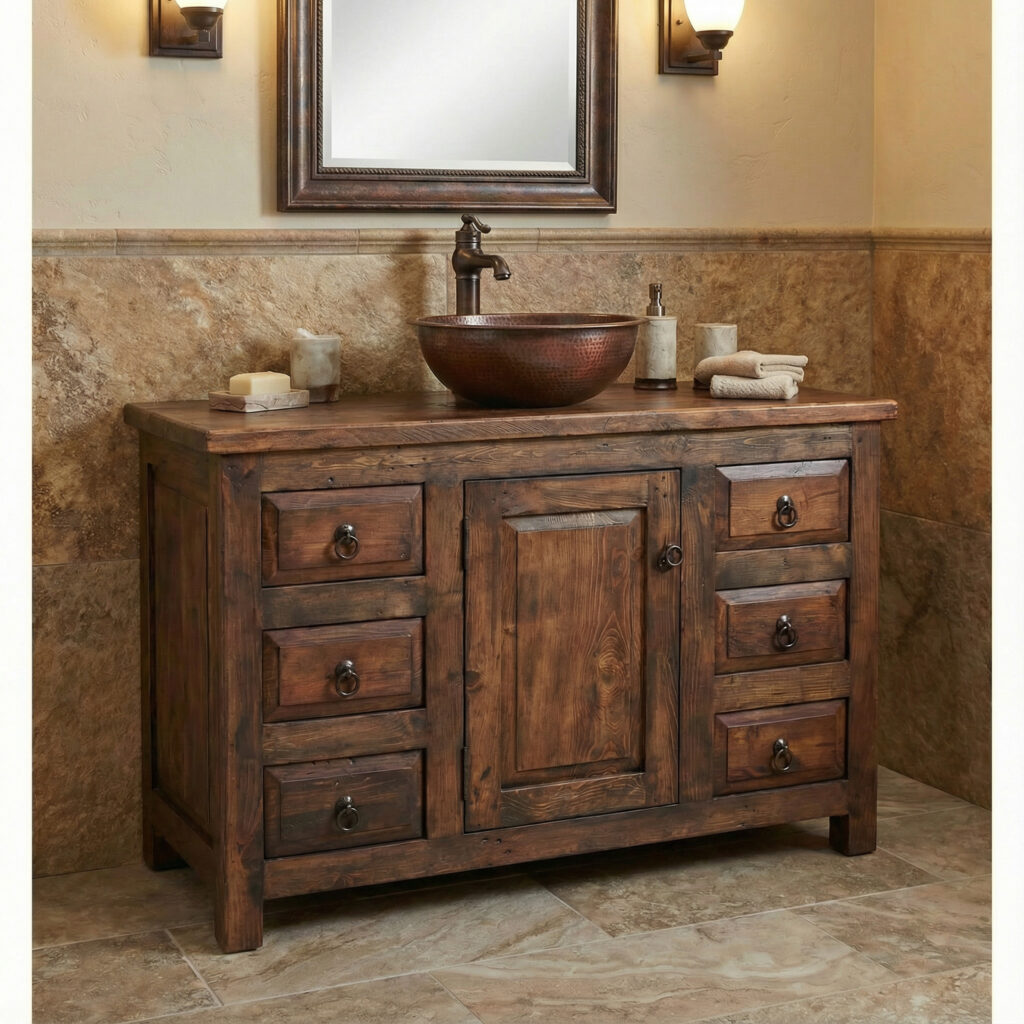
Choose a vessel sink if you want the sink to be the focal point and you’re pairing it with a lower, 32″-tall vanity. Choose a drop-in sink if you want easier cleaning, less splashing and a standard faucet on a 36″-tall vanity. A semi-recessed sink sits in between. Below is how each one works on a solid wood top.
The three sink styles for a wood vanity
- Vessel: a bowl that sits on top of the counter. Only a drain hole is cut in the top.
- Drop-in (self-rimming): drops into a hole cut in the counter, with a rim resting on top (Fine Homebuilding).
- Semi-recessed: the basin sits partly below the counter while the rim and most of the bowl sit above it (Signature Hardware).
Side-by-side comparison
| Vessel | Drop-in | Semi-recessed | |
|---|---|---|---|
| Look | Statement piece | Classic, understated | Halfway between |
| Best vanity height | 32″ | 36″ | 32″–34″ |
| Faucet | Tall vessel faucet or wall-mount | Standard deck faucet | Tall or mid-height faucet |
| Counter cutout | Drain hole only | Full sink opening | Partial opening |
| Cleaning | Around the base of the bowl | Rim edge can trap grime | Rim edge |
| Splashing | More likely | Least likely | In between |
| Kid-friendly | Less so (taller rim) | Yes | Fairly |
Vessel sinks: pros and cons
Pros
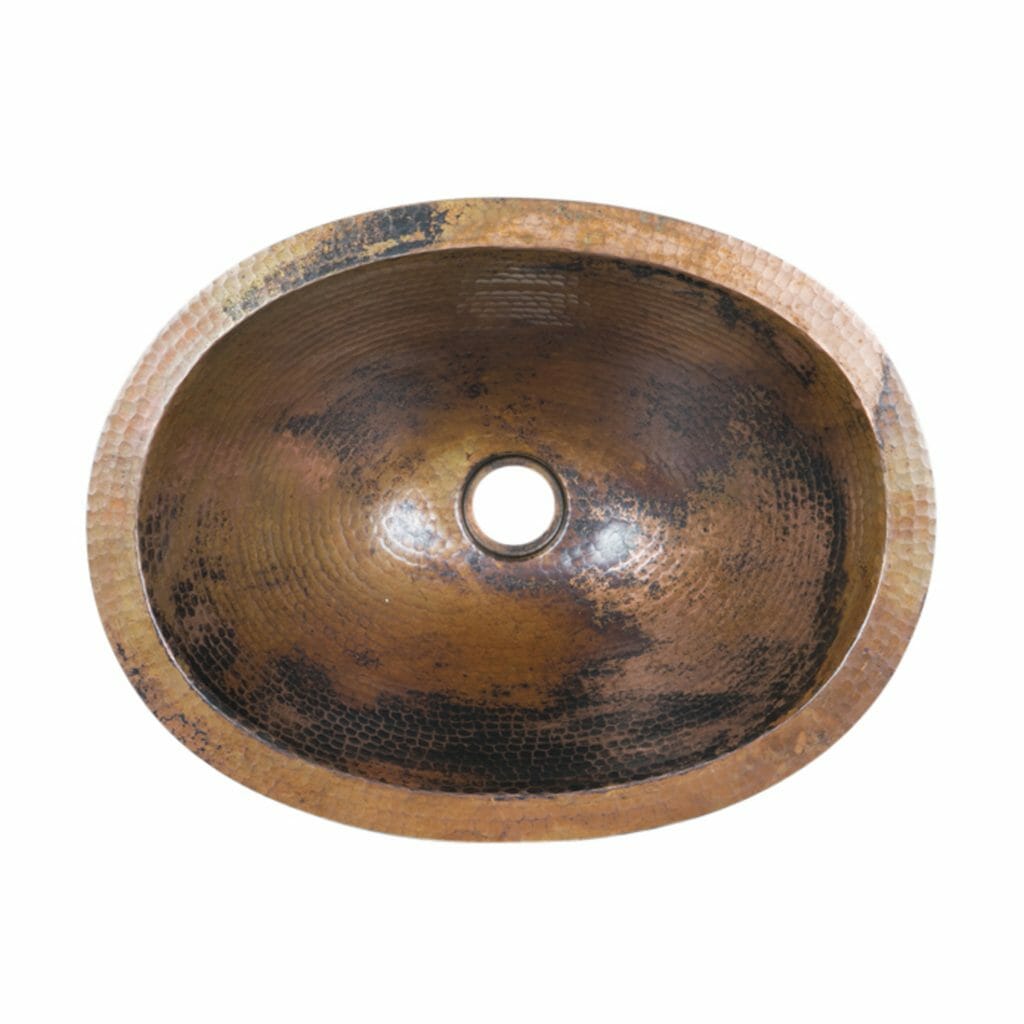
- Visual impact. A hammered copper or stone bowl turns the vanity into a centerpiece.
- Simpler cutout. You only drill a hole for the drain, unlike a drop-in or undermount sink that removes more of the counter (Angi). On a solid wood top, that means more wood stays intact.
- More counter at the edges. The bowl sits on top, so the cabinet below keeps more usable storage.
Cons
- Height. The bowl adds 4″–6″. On a standard 36″ vanity the rim can end up above 40″. Pair vessels with a 32″-tall vanity.
- Faucet cost. Vessel sinks often cost more overall because the faucet tends to cost more (Horow).
- Splashing. Water can land on the counter around the bowl, so a sealed top matters.
- Stability. Vessel sinks are secured at a single point rather than around the whole perimeter (Kingston Brass); proper installation is important.

Drop-in sinks: pros and cons
Pros
- Easy to install into an existing vanity without changing the countertop (Modernize).
- Comfortable height on a 36″ vanity, with less splashing.
- Standard faucets fit, giving you more choice.
Cons
- Less drama. The sink fades into the counter rather than standing out.
- The rim. The exposed lip takes a little counter space and needs wiping.
- Larger cutout in the wood top, which must be sealed well.
Getting the height right
This is the most common mistake we see. Standard-height vanities run 30″–32″ and comfort-height vanities about 35″–36″ (Angi). Add the sink and you get the real working height:
| Vanity height | Sink | Approx. rim height | Verdict |
|---|---|---|---|
| 32″ | 3.5″ copper vessel | 35.5″ | Comfortable |
| 32″ | 5″ copper vessel | 37″ | Comfortable for most adults |
| 36″ | Drop-in | 36″ | Comfortable |
| 36″ | 5″ vessel | 41″ | Too tall for most people |
That’s why our vanities pair a 20″ x 32″ size with vessel sinks and a 22″ x 36″ size with drop-in sinks. See the full vanity size guide.
Choosing the faucet
- Vessel: a tall single-hole faucet whose spout clears the rim and reaches the center of the bowl. Our Vessel Waterfall Faucet and Vessel Gooseneck Faucet come in matte black or oil-rubbed bronze.
- Drop-in: a standard deck-mounted faucet; browse faucets.
- Order together. We can drill the wood top for your sink and faucet so the vanity arrives ready to plumb.
Copper vs ceramic
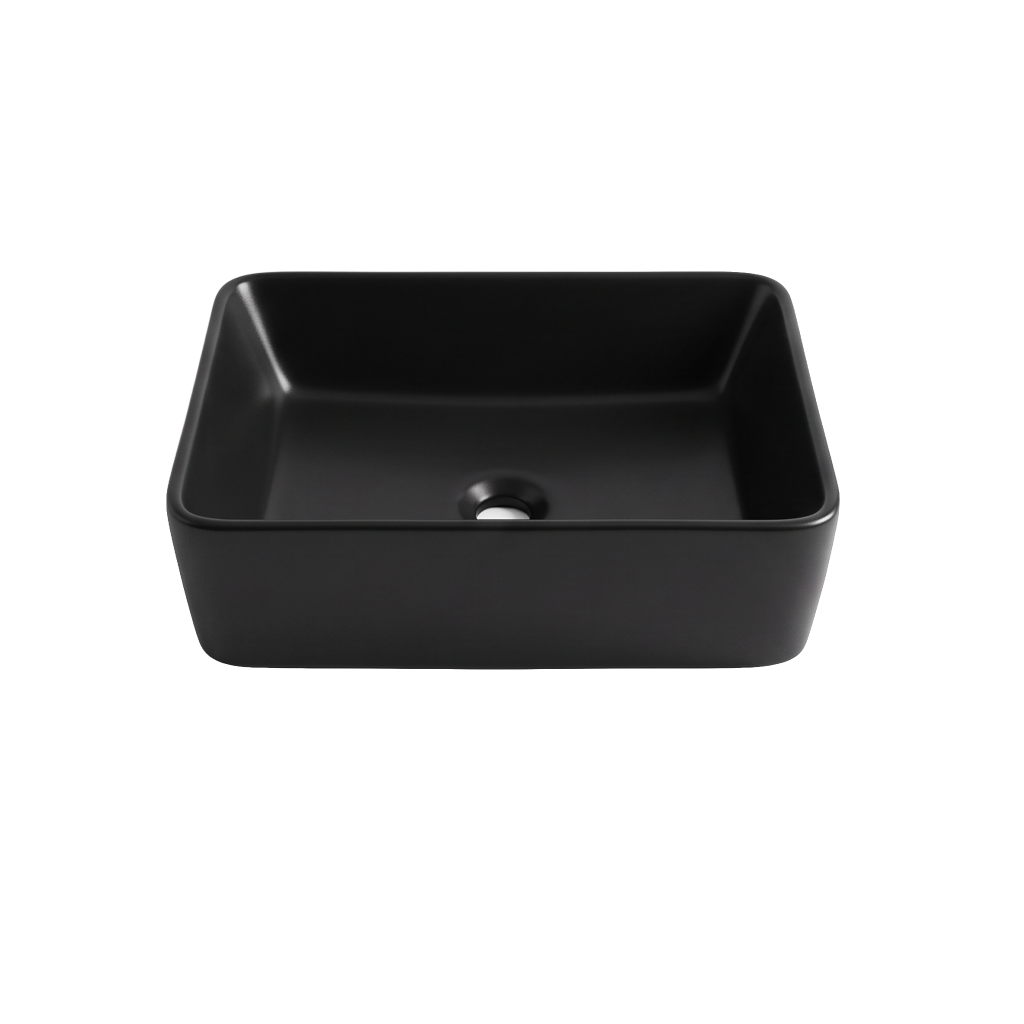
Copper warms up rustic wood and develops a patina over time; see copper sinks. Ceramic is easy to clean and reads cleaner and brighter — our ceramic sinks include white and black vessels and a white semi-recessed option for $150.
Quick checklist
- Decide whether the sink should stand out (vessel) or blend in (drop-in).
- Match vanity height: 32″ for vessel, 36″ for drop-in.
- Pick a faucet that clears the rim and reaches the bowl’s center.
- Consider who uses the bathroom — kids do better with drop-ins.
- Order sink, faucet and vanity together so the top is drilled correctly.
Installing a vessel sink on a wood top
Most of the work happens before the sink arrives. Because a vessel sits on top of the counter, the details below matter more than they would for a drop-in.
- Drill the drain hole where the bowl will be centered. We can drill it for you when you order the sink with the vanity.
- Drill the faucet hole behind the bowl, far enough back that the bowl and faucet don’t touch.
- Seal the cut edges of the holes so water can’t reach bare wood.
- Set the sink on a mounting ring or a bead of silicone, per the sink’s instructions, and tighten the drain.
- Caulk the base lightly so water running down the outside doesn’t seep under the bowl.
Kingston Brass points out that vessel sinks are anchored at a single point (Kingston Brass), so a firm, level drain connection is what keeps the bowl from shifting.
Installing a drop-in sink on a wood top
- Trace the template that comes with the sink onto the top.
- Cut the opening with a jigsaw, staying inside the line.
- Seal the cut edge of the wood thoroughly — this edge sits right under the rim where water collects.
- Lay a bead of silicone under the rim and press the sink into place.
- Wipe away excess and let it cure before using the sink.
Cleaning and care by sink type
| Sink | Daily care | Avoid |
|---|---|---|
| Copper vessel or drop-in | Rinse and wipe dry; mild soap | Abrasive pads, bleach, harsh chemical cleaners |
| Ceramic | Mild soap or non-abrasive cleaner | Heavy impacts that can chip the glaze |
| Wood top around the sink | Wipe up splashes, especially at the faucet base | Leaving puddles to dry on the surface |
Copper develops a living patina over time; many owners love how it deepens. See our furniture care guide for the wood around it.
Budget: what each choice costs
The sink itself is only part of the cost. Here’s how prices compare for the pieces you’d buy with a FoxDen vanity:
| Item | Price |
|---|---|
| Oval copper vessel / round copper vessel | $195 |
| Oval copper drop-in | $195 |
| Heavy-rimmed round copper drop-in | $349 |
| Rectangle copper vessel | $395 |
| White rectangular ceramic vessel | $150 |
| Vessel waterfall or gooseneck faucet | $99 |
Which is better for your household?
- Primary bath for two adults: vessel sinks on a double vanity make a strong design statement.
- Family or kids’ bath: drop-in sinks are lower, splash less and are easier for small hands.
- Guest bath or powder room: a vessel sink is a memorable touch in a room used briefly.
- Accessibility: lower rims are easier to reach; the ADA’s maximum sink height is 34″ to the rim (Home Depot), so a drop-in on a lower vanity is usually the better choice where that matters.
Frequently asked questions
Are vessel sinks out of style?
Not in rustic and farmhouse bathrooms, where a copper or stone bowl suits the look. In very modern spaces, flush or undermount sinks are more common.
Do vessel sinks splash more?
Generally yes, because the rim is higher and water can run down the outside. A sealed wood top and the right faucet reach keep it under control.
Can I put a vessel sink on a 36″ vanity?
You can, but the rim will likely land around 40″–41″, which is uncomfortable for most people. A 32″ vanity is a better match.
Is a drop-in sink easier to replace later?
Usually, as long as the new sink fits the existing cutout. Measure the opening before you shop.
Ready to pair? Shop rustic bathroom vanities and sinks, or read our complete vanity guide.